
📈 Why Pickleball Injuries Are Increasing
Pickleball has experienced a meteoric rise in popularity, particularly among adults aged 40 and older. As the fastest-growing sport in the United States, participation increased by 48% in a single year recently. However, this growth has been accompanied by an alarming number of sports-related injuries, which have risen by approximately 21%. For players over the age of 50, who account for more than 90% of these injuries, the primary mechanisms are often slips, trips, falls, or sudden dives. Most injuries occur during high-demand movements such as lunging, planting, or sudden direction changes.
⚠️ Most Common Pickleball Injuries
1. Lower Extremity Injuries Lower extremity issues are the most frequent, accounting for a significant portion of pickleball-related medical visits.
- Ankle Sprains: Often resulting from lateral movements or sudden changes in direction that cause the ankle to roll.
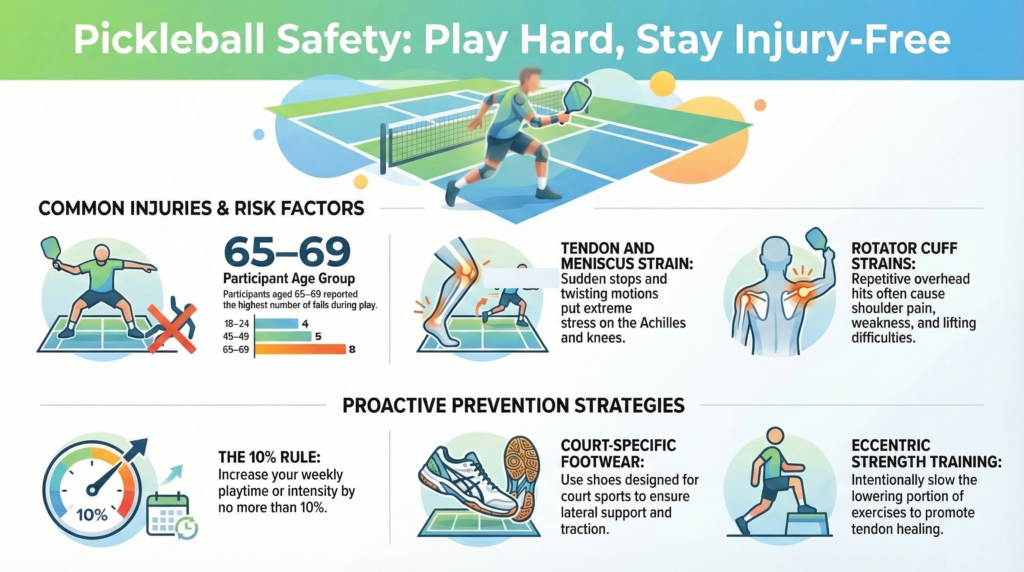
- Achilles Tendonitis & Rupture: The quick, explosive movements and sudden stops required in play put significant strain on the Achilles tendon.
- Knee Strains: Sudden pivots and awkward landings frequently stress the knee, particularly the meniscus, which acts as a shock absorber.
2. Upper Extremity Injuries The repetitive nature of racket sports makes the upper body highly vulnerable.
- “Pickleball Elbow”: Similar to tennis elbow (lateral epicondylitis), this is caused by repetitive wrist extension and gripping actions, leading to microtears in the forearm muscles.
- Wrist Fractures: These are common when a player attempts to break a fall by landing on an outstretched hand .
- Shoulder Overuse: Rotator cuff strains are frequent due to repetitive overhead motions, aggressive smashes, and serves.
3. Falls and Balance-Related Injuries Falls are a major concern, accounting for 63% of all pickleball-related injuries seen in emergency departments. Research shows that 42% of recreational players report falling during play, with lunging and moving backward identified as the leading causes of these incidents.
🧠 Why These Injuries Happen
Evidence highlights several key risk factors for pickleball enthusiasts:
- Age-Related Decline: Older players often experience a decline in balance, reaction time, and power.
- Movement Mechanics: Slower change-of-direction (COD) times are significantly correlated with a higher history of falls.
- Specific Maneuvers: Moving backward is particularly challenging because the limits of stability are smaller when moving in that direction.
- Inadequate Preparation: A lack of proper conditioning or dynamic warm-ups increases the risk of muscle and tendon strains.
🏥 Physical Therapy Management
1. Conservative Treatment (First-line) Physical therapy is the most effective first choice for most pickleball injuries, as it addresses the root cause rather than just symptoms. Most cases are managed non-surgically through pain management, activity modification, and bracing or taping to provide extra support.
2. Therapeutic Exercise
- Strength Training: Focusing on the quadriceps, hamstrings, glutes, and hip stabilizers improves stability and reduces injury risk.
- Balance & Proprioception Training: Exercises like single-leg stances and dynamic balance drills are essential for fall prevention.
- Eccentric Training: This is a gold standard for tendon health, particularly for the Achilles and lateral elbow, as it helps manage tissue breakdown and promotes healing.
3. Sport-Specific Retraining Physical therapists work with players to improve proper lunging mechanics and safe change-of-direction strategies. Training that includes controlled backward movement is highly recommended to reduce the risk of future falls.
4. Return-to-Play Progression Rehab typically follows a criterion-based progression, moving from pain-free daily activities to gradual loading (like walking or jogging) before returning to full, competitive drills.
🛡️ Injury Prevention Tips
- Proper Footwear: Wear court-specific shoes that provide lateral support and traction; avoid running or walking shoes, which are designed primarily for forward motion.
- The 10% Rule: Gradually increase your playing time or intensity by no more than 10% each week to allow your body to adapt.
- Dynamic Warm-up: Spend at least 10 minutes on exercises like arm circles, leg swings, and ankle circles to prepare your muscles and joints for the demands of the court.
- Strength & Balance: Incorporate targeted strength and balance training 2–3 times per week to protect your joints and improve performance.
Key Takeaways: Most pickleball injuries are preventable or manageable through targeted physical therapy. By focusing on balance, strength, and proper technique, you can stay on the court and enjoy the game safely.