
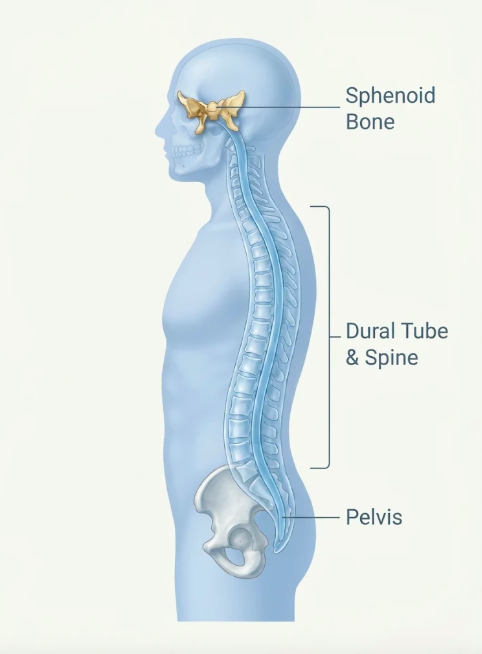
When you have nagging lower back pain, tight hips, or a stubborn headache, it is easy to treat each ache as its own separate issue. However, the human body works as one giant, interconnected system. In physical therapy, looking at the big picture often reveals surprising connections—like the relationship between a small bone in the center of your skull and the large bones of your pelvis.
Meet the Two Key Players
To understand this connection, it helps to know the two main parts involved:
- The Sphenoid Bone: This is a butterfly-shaped bone located right in the middle of the base of your skull, behind your eyes and nose. It connects to almost every other bone in your head, acting as a central hub for your skull.
- The Pelvis: Located at the base of your spine, your pelvis is a sturdy ring of bones that supports your upper body, protects your internal organs, and connects your spine to your legs.
How Are They Connected?
Even though your head and your hips are at opposite ends of your torso, they are physically linked in two major ways:
1. The Dural Tube (Your Spine’s Internal Highway) Running inside your spinal column is a tough, protective membrane called the dura mater. Think of it like a flexible sleeve that surrounds your brain and spinal cord. This membrane attaches firmly at the top inside your skull (including the sphenoid bone) and anchors all the way down at the bottom to your tailbone and pelvis. Because they are connected by this continuous tissue, tension or a slight shift at one end can gently pull on the other—much like pulling on one corner of a bedsheet affects the opposite corner.
2. The Body’s Balancing Act (Posture and Movement) Your brain’s number one job is to keep your eyes level with the horizon so you can see clearly and keep your balance. If your pelvis tilts slightly to one side due to tight muscles, an old ankle sprain, or sitting unevenly at a desk, your spine naturally curves to compensate. To keep your eyes level, the muscles at the base of your skull and around your sphenoid bone have to work overtime to tilt your head back into alignment.
What This Means for Your Pain
Because of this head-to-hip connection, the site of your pain isn’t always the true source of the problem:
- Jaw Pain and Headaches: Tension in your hips or lower back can travel up the spine, leading to tightness in the neck, jaw clenching, or tension headaches.
- Stubborn Hip or Back Tightness: On the flip side, stress, eye strain, or an old head injury affecting the upper neck and skull can cause your body to subtly shift its posture downward, making your lower back or hips feel chronically stiff.
How Physical Therapy Helps
Instead of only chasing where it hurts, a physical therapist looks at how your entire body moves together. By using gentle hands-on techniques to release tension around the neck and pelvis, alongside targeted exercises to improve your core stability and posture, physical therapy helps restore balance to the whole chain.